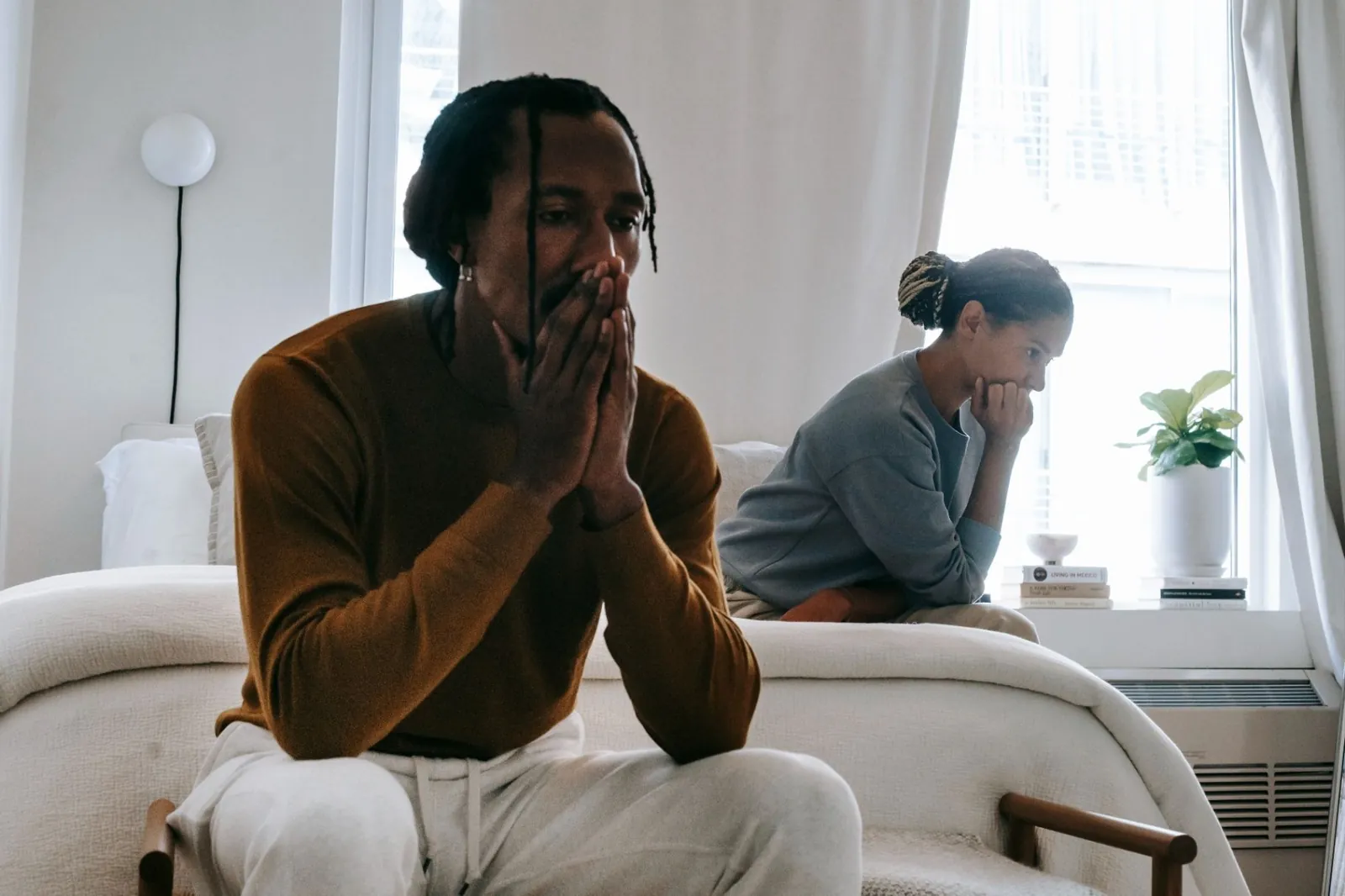

More and more, the couples who reach out to me have already been in couples therapy. Some had a therapist who sat quietly while they argued week after week and never seemed to have much to say. Others worked with someone trained in CBT, EMDR, or ACT — approaches that work well for individuals but weren't designed for the specific dynamics of intimate partnerships. Others were told their relationship problems were really trauma responses, which may be partly true, but left them no clearer on how to actually repair things with each other.
They all tried. It just didn't work. And most of them blame themselves.
They shouldn't. There's a specific reason couples therapy fails so often, and it has nothing to do with how hard the couple was trying.
What the Research Actually Shows
Dr. John Gottman's decades of research on couples identified something that, once you understand it, explains why so many approaches fall short. In his studies, Gottman was able to predict divorce with startling accuracy — not by looking at how often couples fought, but by looking at how they fought. Specifically, by looking at the first few minutes of a conflict conversation.
The way an argument begins predicts, with about 96% accuracy, how it will end. If the opening is harsh — critical, contemptuous, loaded with blame — the argument almost never recovers and ends well. This one finding has enormous implications for treatment. It means that teaching communication skills in the abstract, or trying to resolve old conflicts without addressing how couples enter disagreements, is largely missing the point.
Most couples therapy doesn't address this. Good couples therapy does.
What That Means for You
If you've been in couples therapy before and felt like you were spinning your wheels, there's a real possibility it's because the approach wasn't tailored to how couples actually work. That's not a referendum on your relationship. It's a training gap.
What effective couples therapy looks like: identifying the actual patterns driving your conflicts, not just the topics; building specific skills around how arguments begin and how quickly you can repair after one goes sideways; and helping both of you understand what's underneath the conflict — what you're each actually trying to say and get, and why it's been so hard to say it directly.
Sixty-nine percent of all conflict in relationships is, according to Gottman's research, unresolvable. That sounds discouraging until you understand what it means: most of what couples fight about are fundamental differences in personality, needs, and values that are never going to disappear. The goal isn't to eliminate the disagreement. It's to change how you navigate it together.
That's what good couples therapy teaches. Not tricks. Not scripts. The actual skills of navigating difference without destroying each other in the process.