
There's a saying that's followed me through years of doing this work: you will either learn how to transform your pain, or you will transmit it. I've sat with thousands of hours of couples, and I can tell you — that's not a metaphor. It's a description of what actually happens.
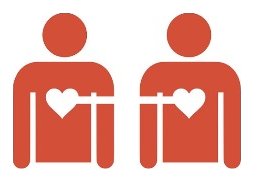
In relationships, we transmit enormous amounts of our individual pain back and forth to each other, often without realizing we're doing it. One partner carries hurt from their childhood, their past relationships, their own unresolved grief — and it leaks out sideways, in arguments that seem to be about one thing but are really about something much older. The other partner does the same. And the relationship becomes the container for all of it.
Good couples counseling should help you identify how you're doing this and how to stop.
What Transformation Actually Looks Like
The path through pain — not around it, not over it — follows three steps I call find, face, and follow.
Finding happens in the mind. It's the moment of clarity: "I'm an angry person." Or: "I've been shutting down in arguments my whole life, and I still don't know why." Or the harder version: "I've been taking things out on my partner that have nothing to do with them."
Facing happens in the heart. It's where you come to terms with what you've just learned — the damage it's done, the people it's affected, the years spent in patterns that weren't working. This is the work people most want to skip. It's uncomfortable, sometimes devastating. But skipping it means you go straight to following — making plans, changing behaviors — without the emotional fuel that makes those changes stick. The facing work is what motivates you to actually do things differently.
Following is where you move into a new way of living. You talk to your partner differently. You catch yourself before the old pattern kicks in. You bring the insight into the room instead of the reaction. This is where your mess, in time, can become something useful — to you, and to the people around you.
The Invitation Underneath the Conflict
When you get into a hard place with your partner — when you feel that pull toward blame, toward criticism, toward the familiar cycle — think of it as an invitation from something deeper in you. An invitation to slow down and find out what that feeling is actually about.
Running toward the difficult, embarrassing, frustrating spaces in yourself rather than away from them is nearly always the path to something essential. It hurts. But it's the kind of hurt that's going somewhere.